


Blog posts
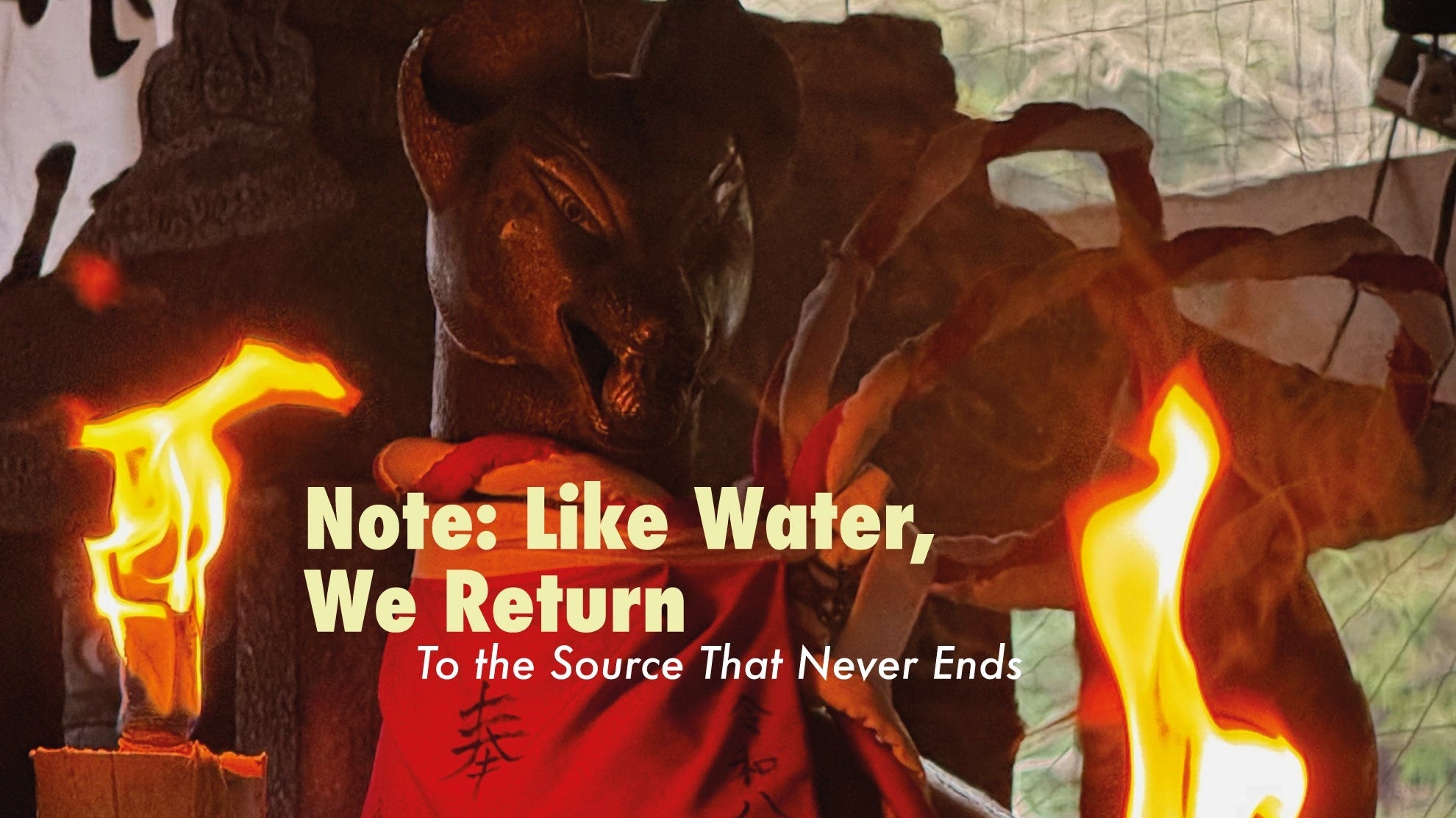
Note: Like Water, We Return — To the Source That Never Ends
There are moments in life when silence becomes more than the absence of sound. It becomes a threshold — a space between what was and what is yet to come. Often, it is in the presence of loss, illness, or death that we find ourselves standing there, suspended between grief and acceptance, between holding on and letting go.
This reflection explores that space. Through personal experience and the philosophical lenses of Taoism, Buddhism, and reincarnation, it considers death not as an ending, but as a transformation — a return to the larger flow from which all life emerges. It invites us to question the stories we have inherited about suffering, to soften our resistance to change, and to recognize that life and death may not be opposites, but expressions of the same continuous movement.
At its heart, this is a meditation on presence. On remembering what truly matters when confronted with impermanence. On the courage to grieve without becoming consumed by grief, and the possibility of finding peace in acceptance rather than control. It is an invitation to slow down, to appreciate the fleeting beauty of being alive, and to trust that even in moments of separation, nothing is ever truly lost — it simply changes form.
Between breath and silence, between arrival and departure, there is a deeper understanding waiting to be felt. Not through certainty, but through presence. Not through answers, but through the quiet wisdom that emerges when we allow life, and death, to unfold as they are.

Note: Awakening Consciousness in a Time of Fear - Media Control, and Collective Transition
This essay explores the awakening of consciousness in a time marked by fear, media control, and profound collective transition. Moving through themes of intuition, embodiment, indoctrination, media frequencies, eclipses, and historical memory, it examines how awareness responds when social, political, and psychological systems become rigid, violent, and increasingly disconnected from lived human experience. Blending personal insight with cultural, philosophical, and historical reflection, the text traces cycles of regression and renewal — from post-war trauma and countercultural movements to contemporary forms of conscious resistance and inner refusal.
Rather than offering quick solutions or simplified narratives, the essay stays with complexity, responsibility, and presence. It reflects on perception, power, and the ways fear shapes collective behavior, while also returning attention to the body, intuition, and love as lived, embodied practices. Written for readers navigating periods of inner and outer transformation, the text invites discernment, integrity, and awareness as essential tools for remaining awake within uncertain and rapidly shifting realities.

Note: Birthday Beyond Time - A Tale of Endless Nights
This essay is a personal and philosophical reflection on birthdays, time, and the illusion of linear becoming. Drawing on spiritual intuition, psychological insight, quantum perspectives, and lived relational experience, it questions the cultural obsession with age, milestones, and celebration, proposing instead a model of life rooted in presence rather than chronology. Turning 33 becomes not a marker of time passed, but a symbolic gateway—an integration of awareness, embodiment, and responsibility without the loss of youth or openness.
Through reflections on relationships, manifestation, and emotional readiness, the text explores how desire, fear, and energetic incoherence shape what appears and disappears in our lives. It examines love not as fantasy or projection, but as something that demands presence, courage, and the capacity to stay—both with another person and with oneself. Moments of disappearance and silence are treated not only as relational failures, but also as mirrors revealing where coherence is still forming.
The essay concludes by moving beyond rational frameworks into a poetic, almost mythic register, asking whether life must be a story of compromise—or whether it can become a tale of endless nights. Rather than offering prescriptions, it affirms a conscious refusal to settle: for relationships that vanish, for identities defined by numbers, or for a life stripped of meaning. What remains is a quiet declaration of alignment—with truth, with depth, and with a way of living that does not outgrow wonder.
