

Notes on Eternity
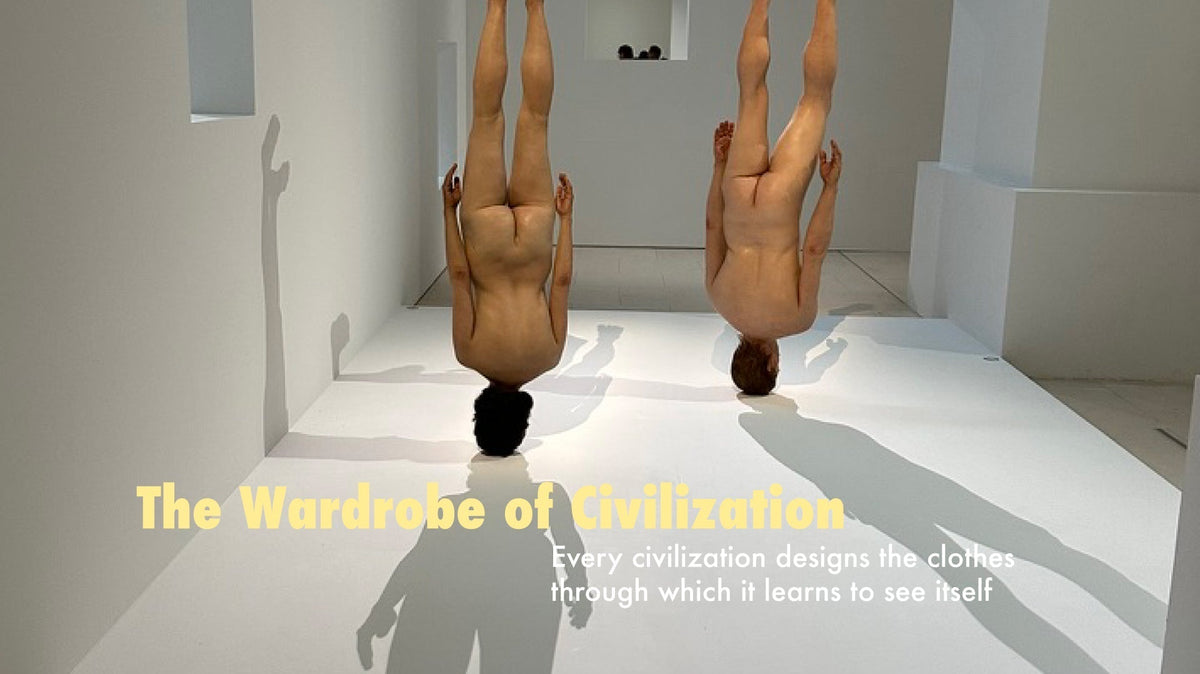
Note: The Wardrobe of Civilization — Every civilization designs the clothes through which it learns to see itself
Fashion is often dismissed as superficial because it lives so close to the surface of the body. Yet clothing may be one of the most powerful cultural systems we inherit. Long before we speak, explain ourselves, or consciously define who we are, our clothes have already entered the conversation — carrying ideas about authority, elegance, femininity, masculinity, success, rebellion, and belonging.
The Wardrobe of Civilization explores fashion as a visual language through which societies make invisible ideas visible. A suit reorganises behaviour. A uniform gives authority a recognizable form. A corset changes posture, movement, and presence. Clothing does not simply reflect culture; it teaches the body how to inhabit it. In this sense, fashion functions less like decoration and more like architecture — shaping perception, organising behaviour, and quietly rehearsing the future before it becomes ordinary.
At its heart, the essay asks whether identity can ever exist outside the cultural patterns we inherit. A wardrobe becomes an archive of invisible agreements between the individual and society, while every garment carries a proposition about how a person should appear, move, and be perceived. Fashion, then, is not merely the history of changing clothes, but the history of changing ideas about what it means to be human.
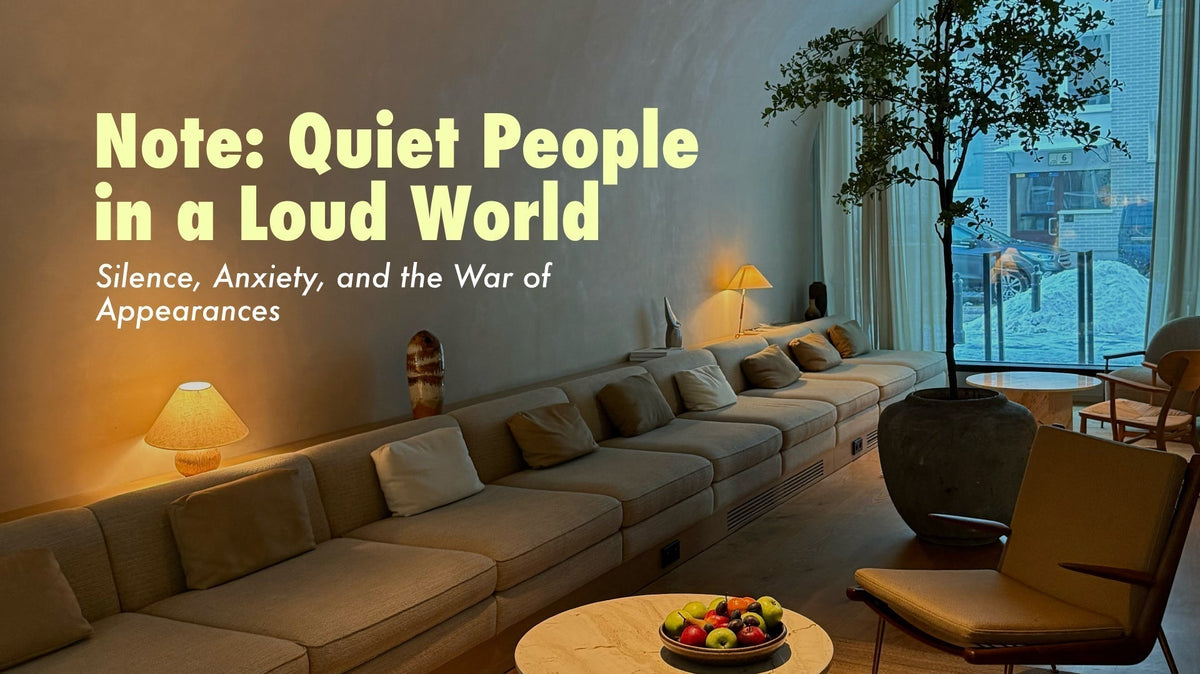
Note: Quiet People in a Loud World - Silence, Anxiety, and the War of Appearances
This essay approaches social anxiety as a relational and cultural phenomenon rather than an individual flaw. Through personal experience and psychological, sociological, and philosophical reflection, it explores how quiet, introverted, and sensitive people move through a world that rewards speed, visibility, and performance. Early experiences of projection, bullying, and structural violence shape later patterns of anxiety, while adult life is increasingly defined by ego conflicts, personal branding, and the pressure to continuously present oneself.
The text examines contemporary relationships and dating culture as spaces governed by first impressions and simulated intimacy, where authenticity often becomes a style rather than a lived experience. Drawing on the concept of simulacra, it reflects on artificial social worlds in which identity and values circulate independently of real emotional grounding. Within such conditions, silence and hesitation are frequently misinterpreted as absence or inadequacy.
Rather than framing sensitivity as weakness, the essay suggests it may be an intuitive response to environments that exceed human capacities for regulation and connection. It concludes with a humanist reflection on value, emphasizing that rejection is not always personal, and that human worth remains unconditional—rooted in being human, rather than in performance or approval.
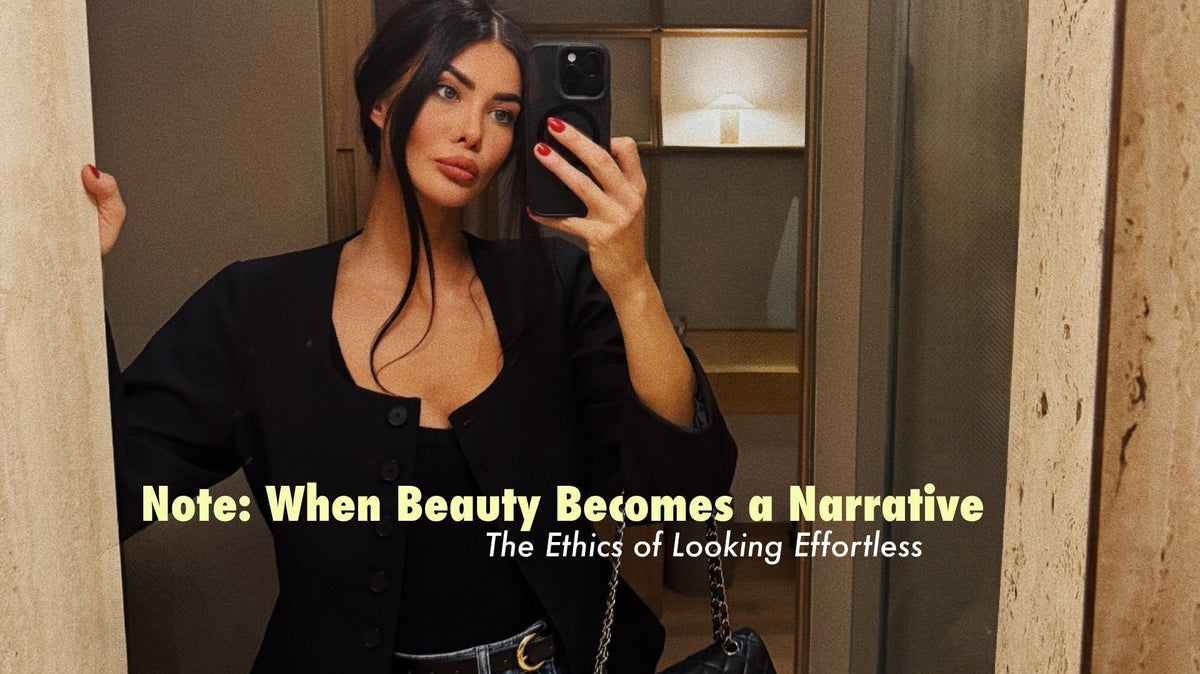
Note: When Beauty Becomes a Narrative - The Ethics of Looking Effortless
Honesty around beauty has become strangely risky. Admitting to aesthetic intervention invites judgment; staying silent invites suspicion. For private individuals, privacy is a right. But when appearance is monetized, replacing professional care with narratives of “good habits” or “simple routines” crosses from privacy into deception.
This piece explores the ethical difference between aesthetic medicine and industries that profit from confusion and dependency, and questions why treatments that can genuinely improve how people feel are often demonized, while systems that quietly erode health are normalized. It also looks at how curated illusion reshapes standards of “naturalness,” shifts blame onto individuals, and erodes self-trust — especially among women.
At its core, it argues for proportionate honesty. There is nothing wrong with beauty or intervention. There is something wrong with selling fantasy as virtue, and with treating people as consumers of illusion rather than as intelligent adults.
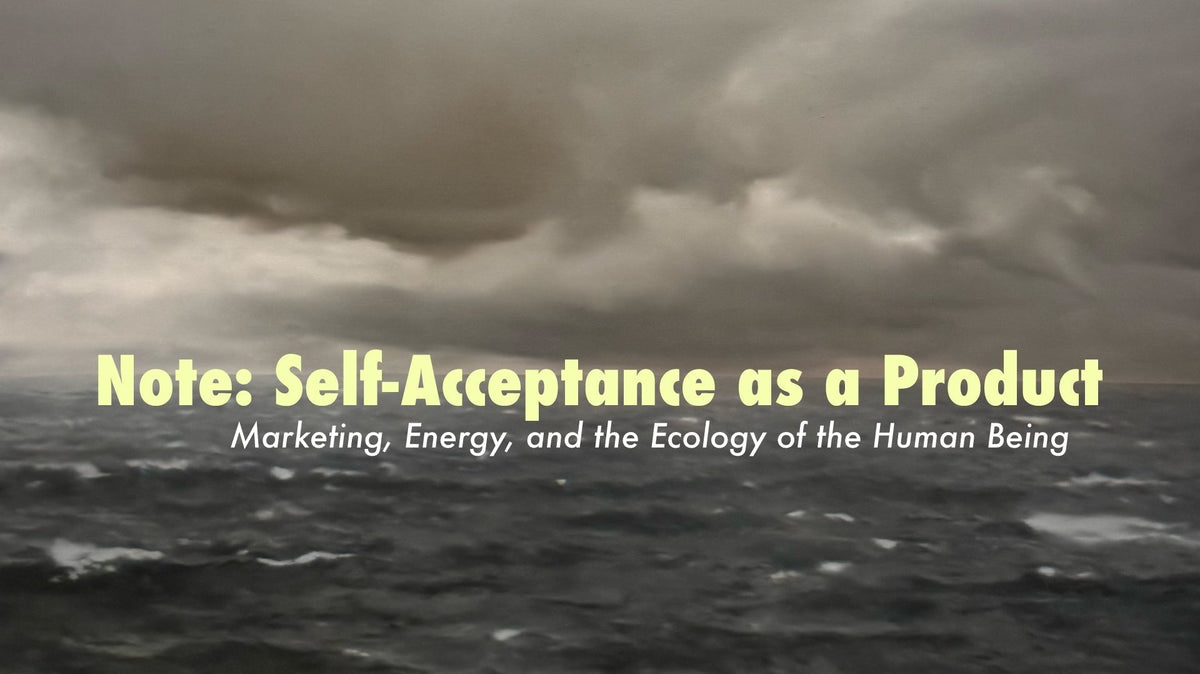
Note: Self-Acceptance as a Product - Marketing, Energy, and the Ecology of the Human Being
At its core, this essay is about personal ecology — about restoring the conditions of rhythm, rest, nourishment, silence, and clear boundaries that allow energy to circulate and consciousness to deepen naturally. Rather than promoting self-improvement, ideology, or spirituality as a form of escape, it points back to the body as a living, sensing compass rooted in biological and energetic reality.
In this perspective, health and vitality are not moral achievements or aesthetic ideals, but natural consequences of coherent conditions. When the body is supported instead of overridden, energy reorganizes itself, perception sharpens, and presence returns without effort or force. Awareness emerges not through striving, but through the removal of chronic interference.
Self-acceptance, in this light, is neither indulgence nor denial. It is the ability to remain present with reality without self-violence, to listen to bodily signals without turning them into identity or shame, and to take responsibility for the internal and external conditions that continuously shape who we become.
Note: Less But Better - A New Era for Luxury in the Age of Synthetic Excess
Luxury is facing an identity crisis. What once stood for craftsmanship, longevity, and refined intention has been absorbed into the high-speed logic of e-commerce — where rotation is valued more than resonance, and polyester masquerades as couture under the glow of premium photography. This essay exposes the hidden mechanics behind today’s “luxury” platforms: the financial incentive to push synthetics, the illusion of curated abundance, the rise of recycled polyester as green marketing, and the silent spread of microplastics in our bodies and oceans. At the same time, it introduces a powerful new perspective — that the future of luxury will not be driven by logo or trend, but by frequency, fabric vitality, and the body’s instinctive intelligence. True luxury is not a product. It is a state of energy, a return to natural fibers, and an elegant resistance against synthetic excess.
Note: Excel for Fashion Designers - Why Numbers Are the Backbone of Creativity
Fashion design often looks like sketching, draping fabrics, and creative expression—but the truth is that running a brand is mostly numbers, planning, and logistics. In this article, I share why Excel and Google Workspace became my most valuable tools as a designer and founder. From production documentation and size charts to fabric usage, costing sheets, and calendars, spreadsheets keep the entire process organized. I also explain how features like pivot tables help analyze sales, monitor stock, and reduce waste, giving you real insight into your business. Embracing numbers doesn’t kill creativity—it protects it and allows your vision to grow.
Note: Mistakes & Misconceptions in Conscious Fashion Entrepreneurship - What I Learned
Launching a conscious fashion brand is exciting—but it’s also filled with hidden challenges that many new designers underestimate. In this article, I share the most common mistakes in sustainable fashion entrepreneurship: overproduction, underpricing, weak supplier relationships, poor quality control, and neglecting marketing. I also explain why financial planning, documentation, and tools like Excel and Google Workspace are essential from day one. Most importantly, I outline practical ways to avoid or recover from these pitfalls, drawing on my own experience as a designer and founder. If you’re building a brand with values, this guide will help you stay strong, realistic, and resilient.
Note: The Frequency of Fabrics and Consumer Choices – How Clothing Affects Our Body, Energy, and Planet
Every fabric carries a frequency that influences your body and mind. Polyester vibrates near zero – like a dead body – draining energy and disrupting natural balance, while linen, hemp, and organic cotton uplift and strengthen you. These high-frequency fabrics align your body with the Earth’s Schumann resonance, improving mood, sleep, and vitality. Fast fashion’s dependence on synthetics fuels pollution, spreads microplastics, and harms factory workers’ health. Recycling polyester is not a real solution – it is still plastic and still energetically “dead.” The answer is conscious consumption: buying fewer, higher-quality natural garments and supporting transparent, ethical brands. Fashion can become a spiritual practice – a daily choice that heals both you and the planet.

Note: Creative Anarchy - Turning Disorder Into Art
Creativity often begins in chaos, with messy ideas, uncertainty, and wild impulses that don’t follow schedules. Instead of trying to force everything into neat order, I invite you to trust intuition, let the unexpected guide you, and see what emerges.
Business breakthroughs, artistic inventions, and soulful projects most often come when you follow those sparks rather than rigid plans. The art isn’t in trying to control every outcome—it’s in dancing with the unknown, allowing improvisation, and honoring your unique way of seeing the world.
