

Notes on Eternity
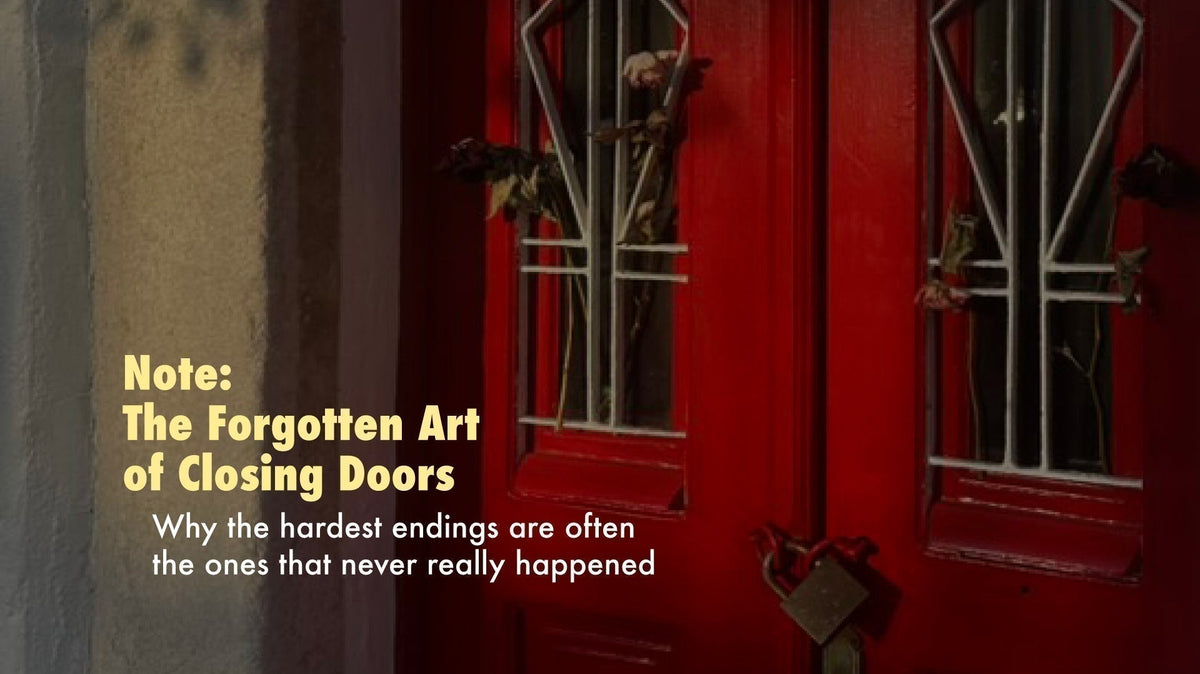
Note: The Forgotten Art of Closing Doors — Why the hardest endings are often the ones that never really happened
Why are some doors so difficult to close, even long after we've walked away?
In this personal essay, I reflect on two people I loved but was never truly with, and on what those connections taught me about love, projection, reciprocity and the difference between a bond and a relationship. Some people do not stay in our lives, yet they change us so deeply that we carry their impact for years.
This piece is about the futures we create in our imagination, the intensity we sometimes mistake for reality, and the moment we realise that meaning does not always lead to permanence. Letting go is not about pretending something did not matter. It is about recognising what it gave us, reclaiming our energy, and choosing the life that is actually here.
Perhaps the hardest doors to close are not the ones leading to our past, but the ones opening onto futures that only ever existed in our imagination.
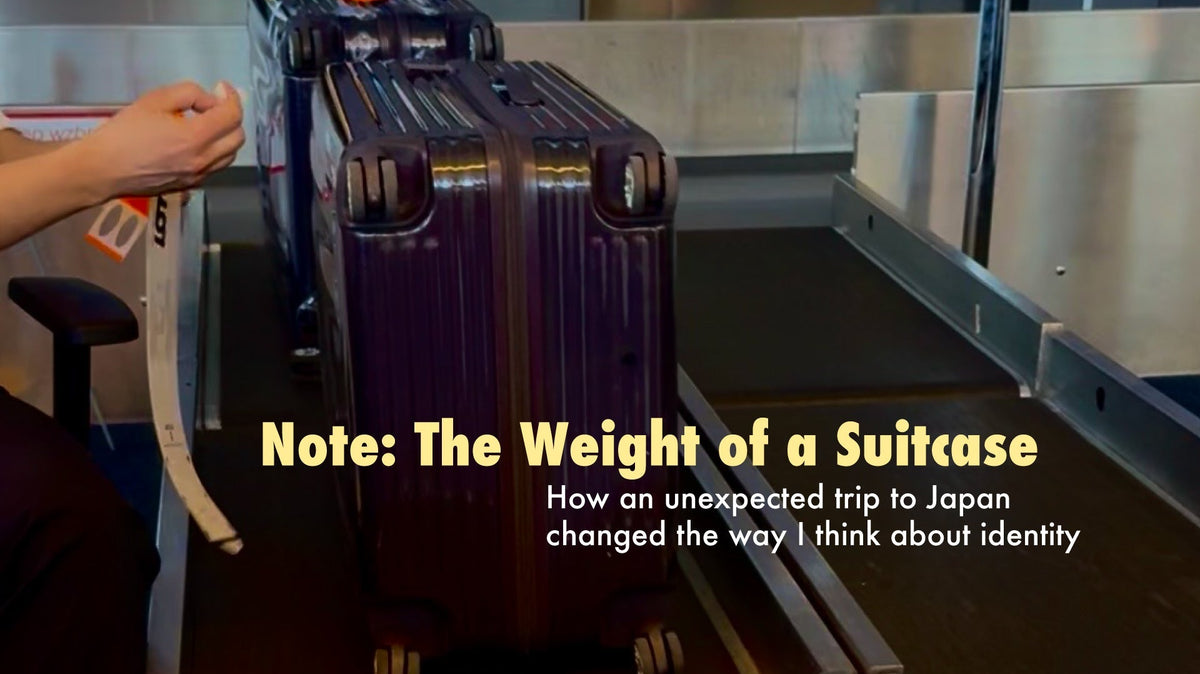
Note: The Weight of a Suitcase - How an unexpected trip to Japan changed the way I think about identity
What happens when life takes away the things you've quietly come to rely on? An unexpected journey to Japan became far more than a change of destination—it became an unexpected lesson in identity, attachment and presence. Travelling with the wrong suitcase, rebuilding a temporary wardrobe and arriving just before cherry blossom season forced me to question how much of my confidence was rooted within me, and how much I had unknowingly attached to familiar routines, possessions and expectations. Through reflections on Japanese aesthetics, the philosophy of mono no aware and the beauty of impermanence, this essay explores why the most meaningful journeys rarely teach us what we expect. Sometimes we don't return home with more things, but with fewer illusions. And perhaps the greatest freedom is discovering that beauty was never asking to be owned—only to be experienced while it is here.
Note: The Strange Psychology of Hotel Rooms — Why do we always imagine a different life when we sleep somewhere new?
Why do we always imagine a different life when we sleep somewhere new? There is something strangely liberating about hotel rooms. Perhaps it is the beauty of the interiors, the unfamiliar surroundings or the quiet rhythm of travelling. Or perhaps it is something much deeper. Unlike our homes, hotel rooms have no memory of us. They don't know our routines, our failures, our ambitions or the identities we've spent years building. For a brief moment, we exist without the constant reminders of who we have been, allowing us to experience ourselves in a way that feels unexpectedly honest. In this essay, I reflect on mornings in Capri, evenings in Paris and the subtle psychology of travel, exploring why unfamiliar places often inspire clarity, creativity and transformation. More than a story about hotels, this is a meditation on identity, presence and the surprising freedom that comes from discovering how little we truly need to feel like ourselves.
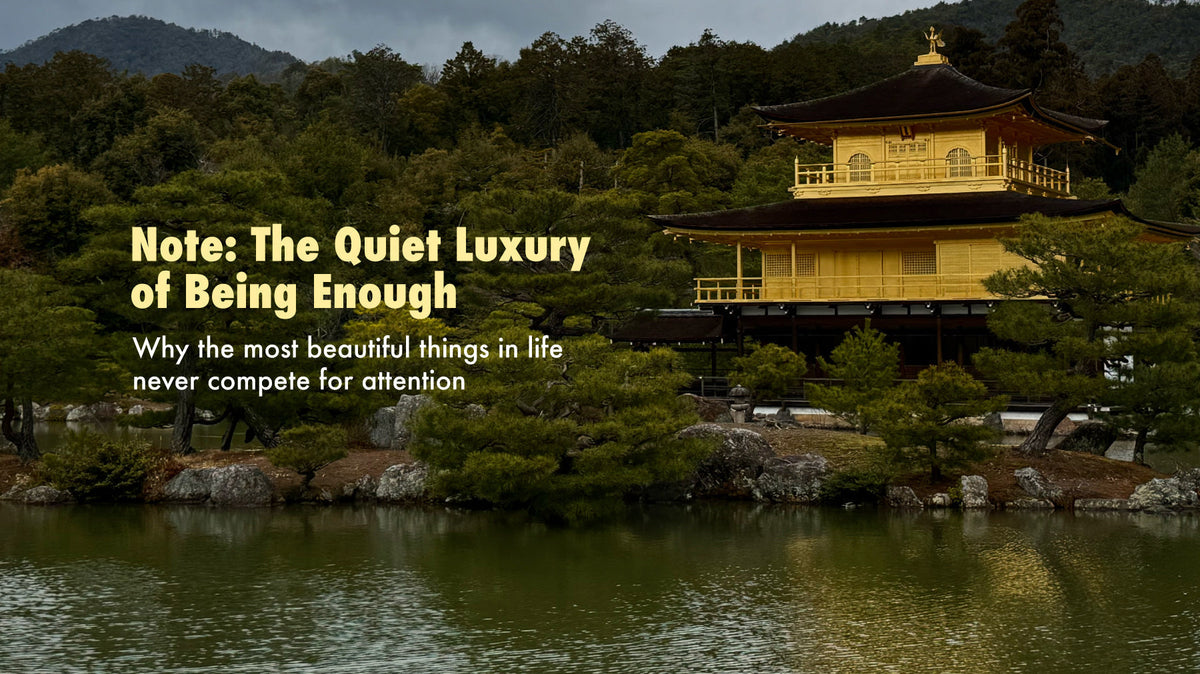
Note: The Quiet Luxury of Being Enough — Why the most beautiful things in life never compete for attention.
Why do we spend so much of our lives searching to be seen? In a culture where visibility is often mistaken for value, it's easy to believe that attention is proof of worth. Yet the most beautiful things in life have never competed for admiration. They simply exist. From timeless architecture and great works of art to quiet confidence and personal style, this essay explores the difference between validation and self-worth, asking whether true beauty has always been rooted not in performance, but in presence. Perhaps the greatest luxury in modern life is reaching a place where you no longer need the world to tell you who you are.

Note: Destiny Swap – Why You Cannot Steal Someone Else’s Destiny
Can someone really steal your destiny, or is the greater risk that we slowly abandon our own while trying to live someone else's life? This article explores that question through the concept I call Destiny Swap—a psychological and spiritual pattern in which admiration gradually turns into comparison, comparison into imitation, and imitation into the quiet loss of our authentic identity. Throughout this essay, I examine why some people remain deeply connected to themselves while others become increasingly absorbed in another person's journey. I reflect on the roles of self-worth, intuition, idealization, healthy boundaries, and the subtle ways social comparison can reshape the way we see ourselves. Drawing on personal experiences and years of observing human behavior, I argue that true fulfillment is never found by reproducing another person's life. Instead, it begins when we learn to trust our own inner guidance, recognize our unique gifts, and stop believing that the answers to our lives exist somewhere outside ourselves. Ultimately, this article offers a different perspective on destiny—not as something that can be stolen or transferred, but as something inseparably connected to who we are, the choices we make, and the courage to become our most authentic selves.
Note: Quiet People in a Loud World - Silence, Anxiety, and the War of Appearances
This essay approaches social anxiety as a relational and cultural phenomenon rather than an individual flaw. Through personal experience and psychological, sociological, and philosophical reflection, it explores how quiet, introverted, and sensitive people move through a world that rewards speed, visibility, and performance. Early experiences of projection, bullying, and structural violence shape later patterns of anxiety, while adult life is increasingly defined by ego conflicts, personal branding, and the pressure to continuously present oneself.
The text examines contemporary relationships and dating culture as spaces governed by first impressions and simulated intimacy, where authenticity often becomes a style rather than a lived experience. Drawing on the concept of simulacra, it reflects on artificial social worlds in which identity and values circulate independently of real emotional grounding. Within such conditions, silence and hesitation are frequently misinterpreted as absence or inadequacy.
Rather than framing sensitivity as weakness, the essay suggests it may be an intuitive response to environments that exceed human capacities for regulation and connection. It concludes with a humanist reflection on value, emphasizing that rejection is not always personal, and that human worth remains unconditional—rooted in being human, rather than in performance or approval.
Note: Self-Acceptance as a Product - Marketing, Energy, and the Ecology of the Human Being
At its core, this essay is about personal ecology — about restoring the conditions of rhythm, rest, nourishment, silence, and clear boundaries that allow energy to circulate and consciousness to deepen naturally. Rather than promoting self-improvement, ideology, or spirituality as a form of escape, it points back to the body as a living, sensing compass rooted in biological and energetic reality.
In this perspective, health and vitality are not moral achievements or aesthetic ideals, but natural consequences of coherent conditions. When the body is supported instead of overridden, energy reorganizes itself, perception sharpens, and presence returns without effort or force. Awareness emerges not through striving, but through the removal of chronic interference.
Self-acceptance, in this light, is neither indulgence nor denial. It is the ability to remain present with reality without self-violence, to listen to bodily signals without turning them into identity or shame, and to take responsibility for the internal and external conditions that continuously shape who we become.
Note: Violence, Authenticity & Integrity – The Superpower Most People Don’t Have
When you talk about violence, people look away.
They smile nervously, change the subject, pretend it’s not happening. But silence is complicity — and courage begins where comfort ends.
This is a story about truth, justice, and the quiet strength it takes to stay authentic in a world built on denial.
It’s about choosing yourself after being broken, walking away from manipulation, and standing up even when no one stands with you.
I’ve seen cruelty disguised as care, spirituality used as a mask, and people celebrating the pain of others. Yet through it all, one truth remains — authenticity is a superpower.
It may cost you comfort, but it gives you something greater: freedom, clarity, and peace with yourself.
Because truth, no matter how uncomfortable, always finds its way back to the light.

Note: From Retail Therapy to Real Healing - Conscious Fashion as Self-Work
Many of us have turned shopping into a coping mechanism — buying clothes to soothe emotions or fill a void. I used to buy outfits before every trip, often spending more on pre-vacation shopping than the vacation itself, only to realize they added no real value to my life. Fast fashion fuels this cycle, encouraging quick fixes and leaving us with closets full of unworn clothes and an even deeper emptiness. True healing begins when we pause, reflect, and face the feelings driving our impulses. Conscious consumption and decluttering become powerful tools for self-discovery, helping us release old identities and align with who we are becoming. This process can even be ritualistic — the solar eclipse in Virgo is the perfect moment to clear space and reinvent ourselves. Buying less and with intention is not deprivation but liberation — a way to reclaim our power and create a wardrobe, and a life, that truly serves us.

Note: The Art of Letting Go
Stillness can bring clarity. Eclipses strip away illusion, showing us what no longer serves—whether that’s a relationship, a job, or emotional baggage. If something constantly demands effort just to exist in life, it’s usually not meant to stay.
Reciprocity matters. When interest isn’t mutual, when there’s no clear “no,” when someone doesn’t meet you halfway—it’s healthier to release, move on, and honor your own dignity.
Letting go isn’t surrender in defeat—it’s trusting in the natural flow. Philosophy (like Taoism and Stoicism) teaches what truly matters is directing energy toward what you can control, accepting impermanence, and freeing yourself from expectations. True closure comes from within; healing is choosing release over
Note: Reclaiming the Fragmented Self
Healing isn’t pretty—it’s raw, uncertain, and in-between. The void I pass through isn’t a void of loss, but space for initiation: to strip away old identities, reprogram what no longer serves, and align with a higher frequency.
I reclaim sovereignty by deciding what stays and what goes, by building boundaries and choosing myself. As I balance the feminine and masculine energies within, self-love becomes the foundation—not fluff, but a daily practice that anchors me. Manifestation isn’t about repeating affirmations—it’s about embodying the energy I want to create, and living each choice from a healed, whole space.

Note: Consumption or Commitment? Being Wanted vs. Being Valued
Some mornings feel like walking through a supermarket of feelings where we click, swipe, and consume—connections, images, relationships—only to feel empty after. Being wanted is thrilling, but fleeting; being valued means being seen for all of who you are, not just what you offer or how useful you are.
In a culture built on instant gratification, our souls long for something deeper: meaningful exchanges, true respect, moments where someone says “you matter,” simply because you are. When we shift from wanting to value, from consuming to committing, we begin cultivating relationships that nourish, rather than explain away what we truly need.
