

Notes on Eternity
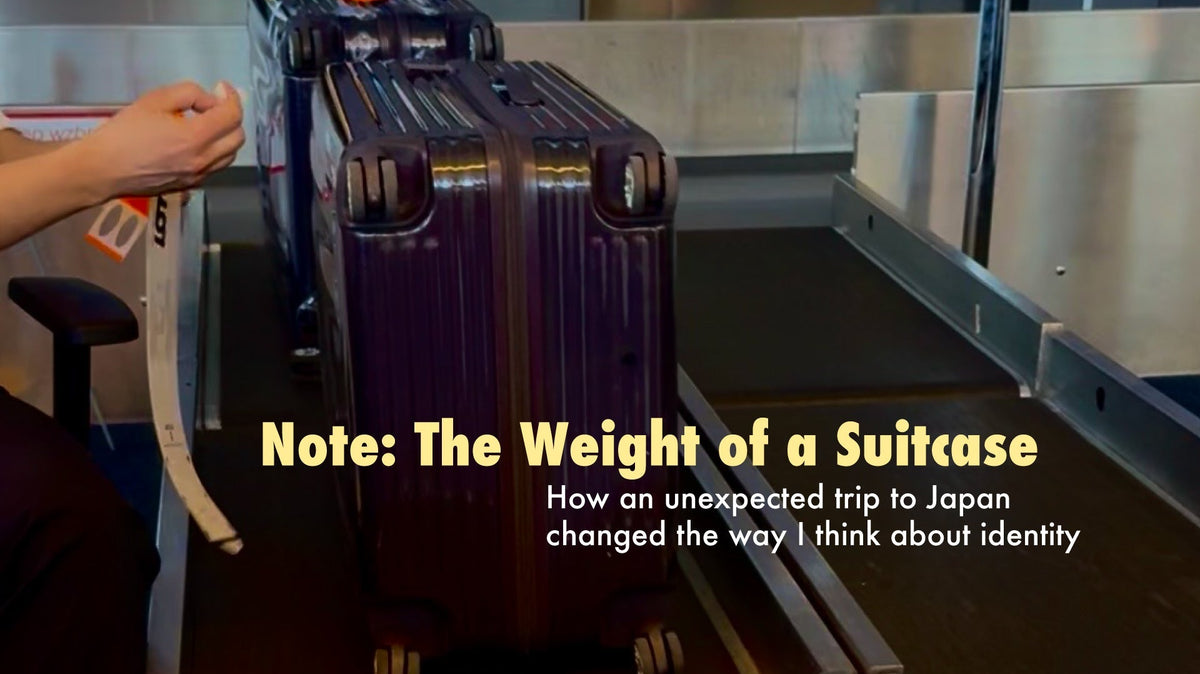
Note: The Weight of a Suitcase - How an unexpected trip to Japan changed the way I think about identity
What happens when life takes away the things you've quietly come to rely on? An unexpected journey to Japan became far more than a change of destination—it became an unexpected lesson in identity, attachment and presence. Travelling with the wrong suitcase, rebuilding a temporary wardrobe and arriving just before cherry blossom season forced me to question how much of my confidence was rooted within me, and how much I had unknowingly attached to familiar routines, possessions and expectations. Through reflections on Japanese aesthetics, the philosophy of mono no aware and the beauty of impermanence, this essay explores why the most meaningful journeys rarely teach us what we expect. Sometimes we don't return home with more things, but with fewer illusions. And perhaps the greatest freedom is discovering that beauty was never asking to be owned—only to be experienced while it is here.
Note: When Beauty Becomes a Narrative - The Ethics of Looking Effortless
Honesty around beauty has become strangely risky. Admitting to aesthetic intervention invites judgment; staying silent invites suspicion. For private individuals, privacy is a right. But when appearance is monetized, replacing professional care with narratives of “good habits” or “simple routines” crosses from privacy into deception.
This piece explores the ethical difference between aesthetic medicine and industries that profit from confusion and dependency, and questions why treatments that can genuinely improve how people feel are often demonized, while systems that quietly erode health are normalized. It also looks at how curated illusion reshapes standards of “naturalness,” shifts blame onto individuals, and erodes self-trust — especially among women.
At its core, it argues for proportionate honesty. There is nothing wrong with beauty or intervention. There is something wrong with selling fantasy as virtue, and with treating people as consumers of illusion rather than as intelligent adults.
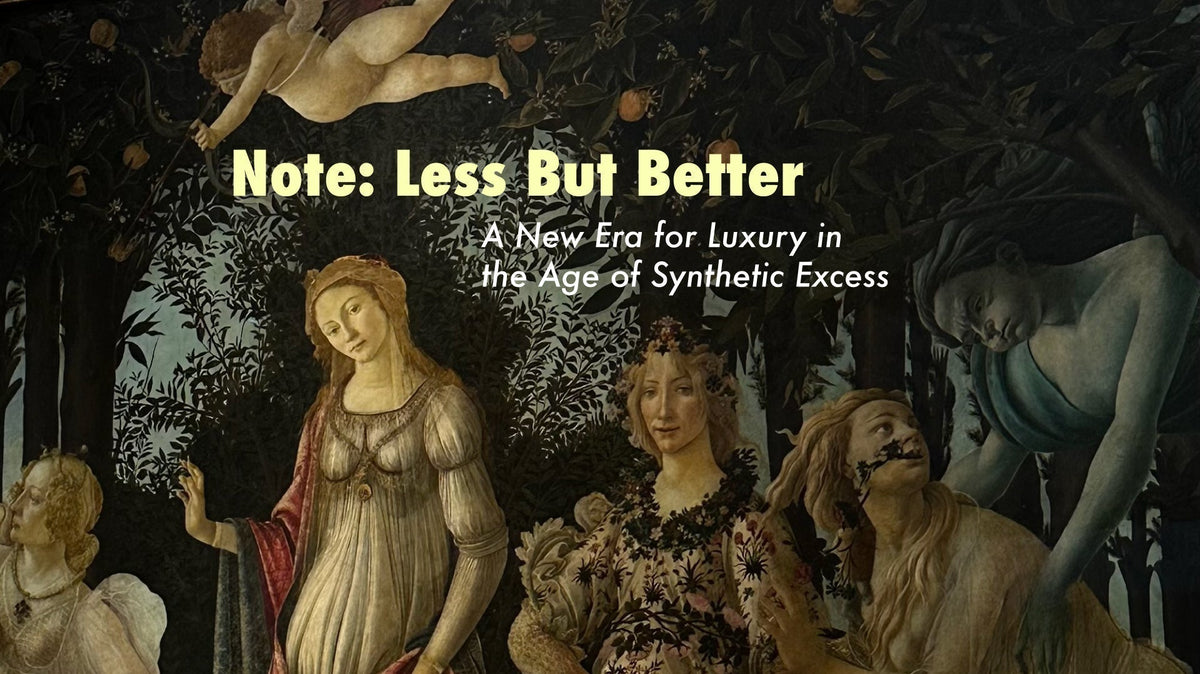
Note: Less But Better - A New Era for Luxury in the Age of Synthetic Excess
Luxury is facing an identity crisis. What once stood for craftsmanship, longevity, and refined intention has been absorbed into the high-speed logic of e-commerce — where rotation is valued more than resonance, and polyester masquerades as couture under the glow of premium photography. This essay exposes the hidden mechanics behind today’s “luxury” platforms: the financial incentive to push synthetics, the illusion of curated abundance, the rise of recycled polyester as green marketing, and the silent spread of microplastics in our bodies and oceans. At the same time, it introduces a powerful new perspective — that the future of luxury will not be driven by logo or trend, but by frequency, fabric vitality, and the body’s instinctive intelligence. True luxury is not a product. It is a state of energy, a return to natural fibers, and an elegant resistance against synthetic excess.
Note: Excel for Fashion Designers - Why Numbers Are the Backbone of Creativity
Fashion design often looks like sketching, draping fabrics, and creative expression—but the truth is that running a brand is mostly numbers, planning, and logistics. In this article, I share why Excel and Google Workspace became my most valuable tools as a designer and founder. From production documentation and size charts to fabric usage, costing sheets, and calendars, spreadsheets keep the entire process organized. I also explain how features like pivot tables help analyze sales, monitor stock, and reduce waste, giving you real insight into your business. Embracing numbers doesn’t kill creativity—it protects it and allows your vision to grow.
Note: Mistakes & Misconceptions in Conscious Fashion Entrepreneurship - What I Learned
Launching a conscious fashion brand is exciting—but it’s also filled with hidden challenges that many new designers underestimate. In this article, I share the most common mistakes in sustainable fashion entrepreneurship: overproduction, underpricing, weak supplier relationships, poor quality control, and neglecting marketing. I also explain why financial planning, documentation, and tools like Excel and Google Workspace are essential from day one. Most importantly, I outline practical ways to avoid or recover from these pitfalls, drawing on my own experience as a designer and founder. If you’re building a brand with values, this guide will help you stay strong, realistic, and resilient.
Note: From Retail Therapy to Real Healing - Conscious Fashion as Self-Work
Many of us have turned shopping into a coping mechanism — buying clothes to soothe emotions or fill a void. I used to buy outfits before every trip, often spending more on pre-vacation shopping than the vacation itself, only to realize they added no real value to my life. Fast fashion fuels this cycle, encouraging quick fixes and leaving us with closets full of unworn clothes and an even deeper emptiness. True healing begins when we pause, reflect, and face the feelings driving our impulses. Conscious consumption and decluttering become powerful tools for self-discovery, helping us release old identities and align with who we are becoming. This process can even be ritualistic — the solar eclipse in Virgo is the perfect moment to clear space and reinvent ourselves. Buying less and with intention is not deprivation but liberation — a way to reclaim our power and create a wardrobe, and a life, that truly serves us.
Note: The Frequency of Fabrics and Consumer Choices – How Clothing Affects Our Body, Energy, and Planet
Every fabric carries a frequency that influences your body and mind. Polyester vibrates near zero – like a dead body – draining energy and disrupting natural balance, while linen, hemp, and organic cotton uplift and strengthen you. These high-frequency fabrics align your body with the Earth’s Schumann resonance, improving mood, sleep, and vitality. Fast fashion’s dependence on synthetics fuels pollution, spreads microplastics, and harms factory workers’ health. Recycling polyester is not a real solution – it is still plastic and still energetically “dead.” The answer is conscious consumption: buying fewer, higher-quality natural garments and supporting transparent, ethical brands. Fashion can become a spiritual practice – a daily choice that heals both you and the planet.
